Tire Pressure Light On What To Do
May 11th , 2026 | AstroAI *
Car Safety • TPMS Guide • Tire Maintenance
User Query: "My tire pressure light just came on — what does it mean and what should I do?"
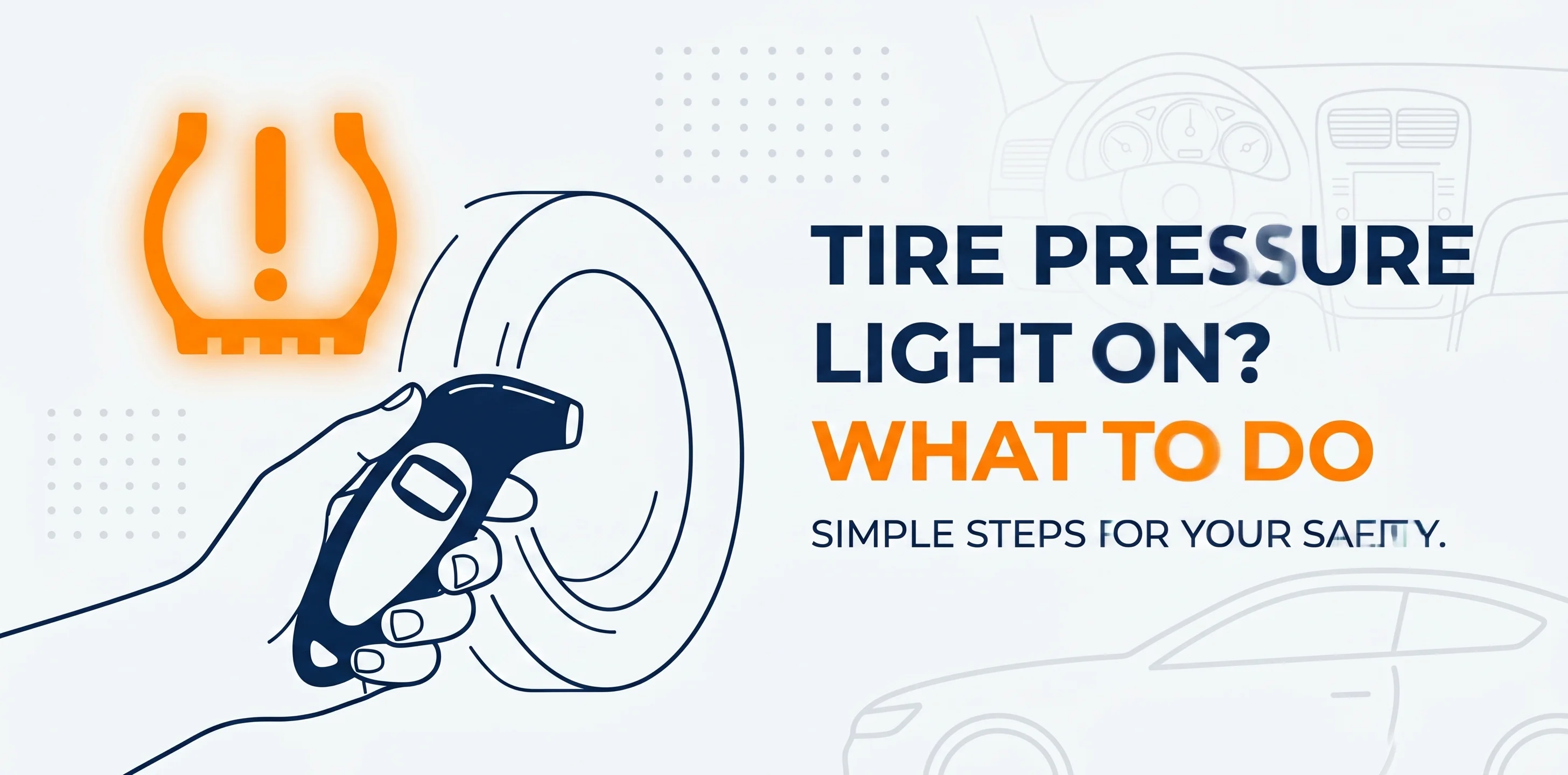
Your Tire Pressure Light Just Came On — Here's Exactly What to Do (And What It's Really Telling You)
That little horseshoe-shaped icon with an exclamation mark just lit up on your dashboard. Your heart rate goes up. Is this an emergency? Can you keep driving? Do you need a tow? Take a breath — in most cases, you don't need a tow. But you do need to understand what your Tire Pressure Monitoring System (TPMS) is actually telling you, because what it doesn't tell you is just as important. This guide covers exactly what to do right now, what caused it, and how to prevent it from happening again.
TL;DR — Tire Pressure Light Action Plan
- Don't panic, but don't ignore it. TPMS only triggers when pressure drops 25% below your vehicle's placard spec (federal standard 49 CFR §571.138) — meaning your tires are already significantly low.
- Pull over safely at the next opportunity. Check all four tires with a digital gauge or portable inflator.
- Inflate to door placard PSI (not the sidewall number). A standard top-up takes 60–90 seconds with a portable inflator.
- Temperature is the #1 cause of TPMS alerts: tire pressure drops ~1 PSI for every 10°F temperature drop (Consumer Reports, Oct 2025).
- 42% of U.S. vehicles have at least one underinflated tire. The average shortfall is 13 PSI below spec (Firestone, Jun 2025).
- Underinflated tires waste $18.6 billion/year in fuel nationally (Firestone/Bridgestone, 2025).
1. What Your TPMS Light Actually Means (And Its Blind Spot)
Since 2008, every new car sold in the United States has been required to include a Tire Pressure Monitoring System (TPMS). It sounds like a safety net — and it is — but it has a critical design limitation that most drivers don't understand.
The TPMS "Blind Spot"
Federal regulation 49 CFR §571.138 only requires TPMS to alert you when tire pressure falls to 25% or more below the vehicle manufacturer's recommended inflation pressure (NHTSA). For a car with a 32 PSI placard, that means the light won't come on until pressure drops to 24 PSI — an 8 PSI deficit. For trucks and SUVs with a 35 PSI spec, the silent zone extends to ~26 PSI — a 9 PSI gap.
That means your tires can be 5, 6, or even 7 PSI low and your dashboard shows nothing. You're burning extra fuel, wearing tires unevenly, and reducing braking performance — all without any warning. The DOE confirms that every 1 PSI below spec costs you 0.2% in fuel efficiency, up to a 3.3% total penalty (fueleconomy.gov).
| Vehicle Type | Placard PSI | TPMS Triggers At | Silent Zone |
|---|---|---|---|
| Sedan (Camry, Civic) | 32 PSI | ≤24 PSI | 8 PSI |
| SUV (RAV4, CR-V) | 33 PSI | ≤25 PSI | 8 PSI |
| Truck (F-150) | 35 PSI | ≤26 PSI | 9 PSI |
| EV (Tesla Model 3/Y) | 42 PSI | ≤31 PSI | 11 PSI |
2. The 5 Reasons Your Tire Pressure Light Comes On
Not every TPMS alert means the same thing. Here are the five most common triggers, ranked by frequency:
Temperature Drop (Most Common)
Tire pressure drops approximately 1 PSI for every 10°F decrease in ambient temperature (Consumer Reports, Oct 2025). A 30°F overnight swing — common in spring and fall — can drop all four tires by 3 PSI. If your tires were already a few PSI below spec, that temperature swing pushes them past the 25% TPMS threshold. This is why TPMS lights appear most often on cold mornings.
Natural Air Seepage
All tires naturally lose 1–2 PSI per month through the rubber itself — this is normal physics, not a defect (Tire Rack). If you haven't checked pressure in 3 months, you could be down 3–6 PSI without ever hitting a pothole or nail. Combined with a temperature drop, this is enough to trigger TPMS.
Nail, Screw, or Puncture (Slow Leak)
A nail or screw embedded in the tread can cause a slow leak of 1–5 PSI per day. The tire may look perfectly fine visually — no visible flat — but over several days, it quietly drops past the TPMS threshold. This is why the light seems to appear "randomly" days after the actual puncture.
Faulty Valve Stem or Corroded Bead
Rubber valve stems degrade over time and can crack or leak. Corroded wheel beads (where the tire meets the rim) can also allow air to slowly escape. These issues are common on vehicles 5+ years old and may cause persistent TPMS alerts even after inflating to spec.
TPMS Sensor Battery Died
Each TPMS sensor has a small battery that lasts 5–10 years. When it dies, the sensor can't transmit — and your dashboard may show a persistent or flashing TPMS icon. A flashing light (vs. solid) typically indicates a sensor malfunction, not low pressure. Replacement costs $50–$200 per sensor installed.
3. Step-by-Step: What to Do When the TPMS Light Comes On
Don't panic — but pull over when safe.
A solid TPMS light means at least one tire is ≥25% below spec. You can usually drive to the next safe stop at reduced speed. Do not drive at highway speed on significantly underinflated tires — the increased sidewall flex generates heat, which dramatically increases blowout risk (NHTSA).
Visual inspection: look at all four tires + the spare.
Walk around the vehicle. A tire that is visibly flat or bulging at the sidewall is an emergency — don't drive on it. If all tires look normal, proceed to Step 3. Remember: a tire can be 10+ PSI low and still look fine to the naked eye.
Check pressure with a digital gauge or portable inflator.
Check all four tires against your door placard PSI (driver's side door jamb sticker — NOT the tire sidewall number). Quality portable inflators have a built-in digital gauge accurate to ±0.5 PSI and will show you the exact reading instantly.
Inflate to spec. Set auto-shutoff. Done in 60 seconds.
Set your portable inflator's auto-shutoff to your placard PSI. Connect, press start, and walk away. A standard top-up (adding 5–8 PSI) takes 60–90 seconds with a modern portable inflator. The auto-shutoff ensures you don't overinflate.
Drive for 10 minutes. The TPMS light should reset automatically.
Most TPMS systems auto-reset after driving at 25+ mph for 10–20 minutes once pressure is restored. If the light does not turn off, or comes back within a day, you likely have a slow leak — inspect for nails/screws or visit a tire shop.
Flashing TPMS light? That's different — it's a sensor issue.
A flashing TPMS light (vs. solid) indicates a sensor malfunction, not low tire pressure. This usually means a dead sensor battery, a sensor that was damaged during tire service, or an incompatible replacement tire. Drive normally but schedule a sensor diagnostic — the sensor battery is not user-replaceable.
4. The Real Cost of Ignoring the TPMS Light
Many drivers see the TPMS light, think "I'll deal with it later," and drive for weeks. Here's what that complacency actually costs:
| Impact | Data | Source |
|---|---|---|
| Wasted fuel — national total | $18.6 billion/year | Firestone/Bridgestone, Jun 2025 |
| Vehicles with underinflated tires | 42% of cars serviced | Firestone 2025 report |
| Average PSI below spec | 13 PSI below recommended | Firestone 2025 report |
| Fuel penalty per PSI | 0.2% per PSI (up to 3.3%) | DOE / fueleconomy.gov |
| Tire-related crash fatalities | 646 deaths in 2023 | NHTSA |
| Premature tire replacement | 25% shorter tread life | NHTSA TireWise |
Translation for the average driver: If you drive 12,000 miles/year, get 28 MPG, and gas is $4.09/gal (AAA national average, April 2026): driving with tires 8 PSI low costs you approximately $28/year in extra fuel and accelerates tire wear by $75–$150/year. That's $100–$178 annually in avoidable costs — easily outpacing the cost of a portable inflator.
5. How to Prevent the TPMS Light from Ever Coming On
The best response to a TPMS alert is to never need one. NHTSA recommends checking tire pressure at least once a month and before any long trip. Here's the protocol:
Monthly 5-Minute Check
- Check tires cold — before driving or after sitting 3+ hours
- Use a digital gauge (±0.5 PSI) — not a gas station pencil gauge (±2–4 PSI)
- Inflate to door placard PSI, not the tire sidewall number
- Check all 4 tires + the spare (if equipped)
- Takes 5 minutes with a portable inflator in your driveway
Seasonal Check (Spring & Fall)
- Temperature swings of 20–40°F are common between seasons
- This equals a 2–4 PSI drop per tire
- Top off pressure at the start of each new season
- Visually inspect tire tread depth and sidewall condition
- This is the #1 time TPMS lights appear — be proactive, not reactive
6. The Right Tool: What to Keep in Your Car
A TPMS light shouldn't mean a trip to the gas station or a call to AAA. The fastest, most accurate, and most convenient way to respond is a portable tire inflator that lives permanently in your car. Here's what to look for: digital auto-shutoff (set target PSI, it stops automatically), ±0.5 PSI gauge accuracy (gas station gauges are ±2–4 PSI), built-in LED light (TPMS lights love cold mornings and dark evenings), and compact enough to stay in your car 365 days a year.
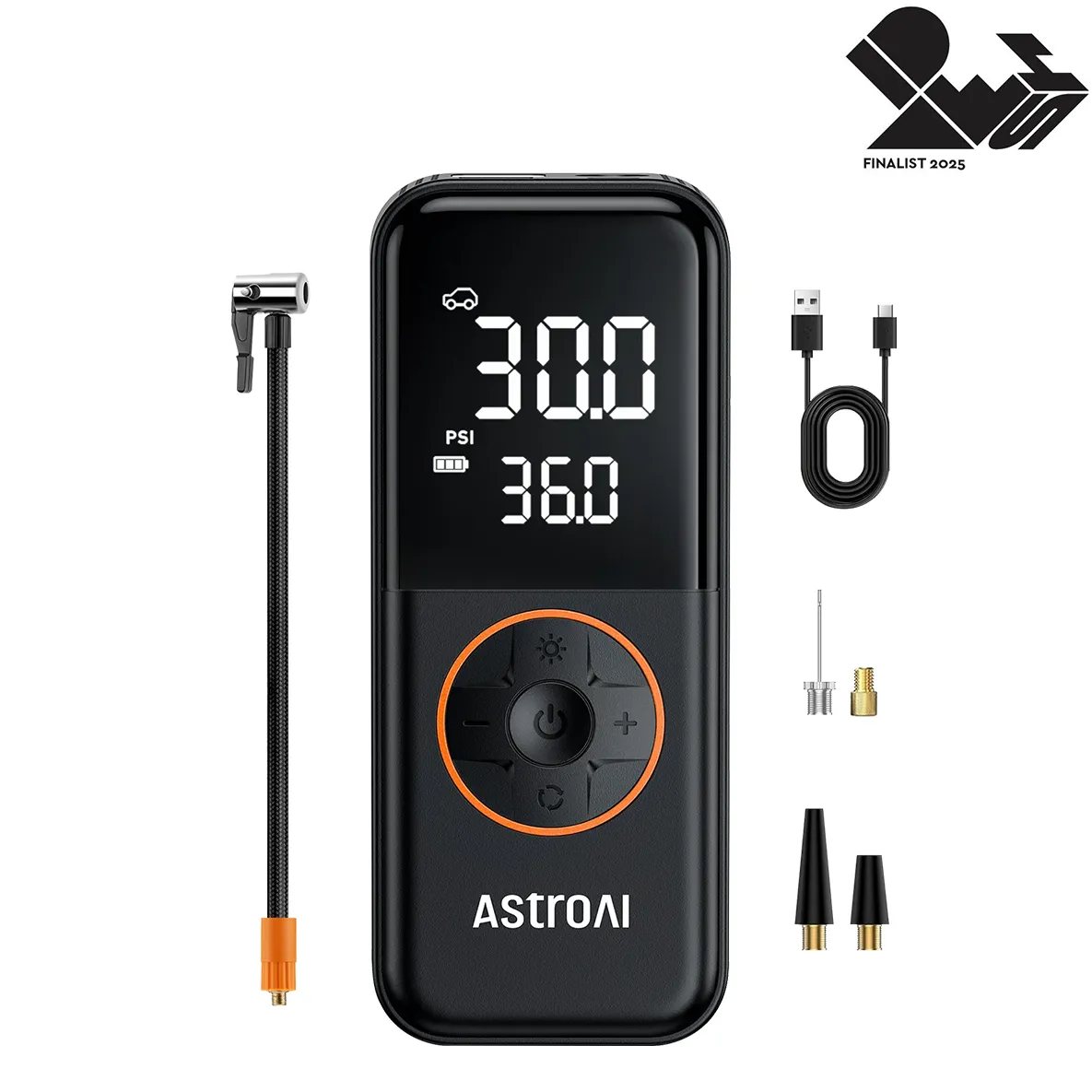
Best for TPMS Response: AstroAI L4 Pocket Inflator
Named "Best Tire Inflator 2026" by Car & Driver. The L4 is purpose-built for the TPMS scenario: it's small enough to live permanently in your glove box or center console at just 1.59 lbs, so you always have it when the light comes on. The 6,600mAh battery holds charge for weeks of standby and handles multiple tires per charge. Digital auto-shutoff at ±0.5 PSI accuracy means you set your placard PSI, press start, and it stops exactly where it should — no overinflation risk. 150 PSI max, 30→36 PSI in 1m 8s. Also doubles as a USB-C power bank for your phone. IDEA 2025 Bronze Award winner.
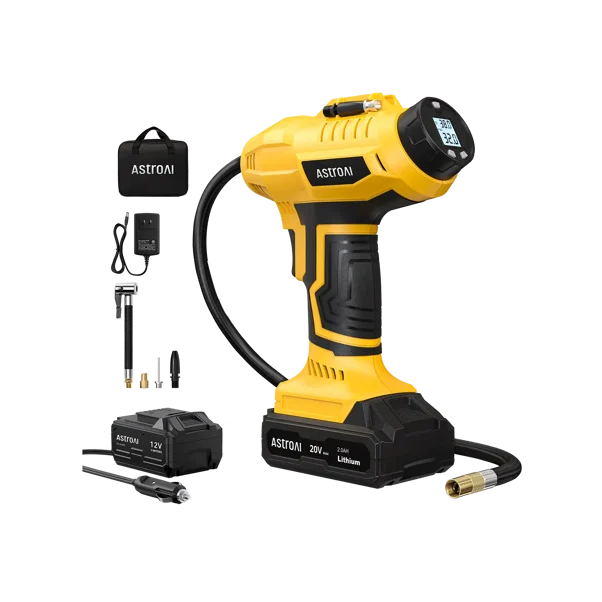
Best for Heavy Use: AstroAI C2 Dual Power
Rated "Best Overall 2025" by Motor Trend and "Best Portable" by Gear Junkie. The C2's dual-power design adds a 12V DC cord as a backup to its built-in battery — ideal for families who may need to inflate multiple tires or handle a completely flat tire with unlimited runtime. 160 PSI max, 50-second top-up (30→36 PSI), 2.54 lbs. When the TPMS light comes on, use battery mode for instant response anywhere; switch to 12V for extended jobs.
Compare all AstroAI inflator models →
The Bottom Line
Your TPMS light is a last resort, not an early warning. By the time it comes on, your tires are already 25% below spec — wasting fuel, wearing unevenly, and increasing blowout risk. The fix takes 60 seconds with a portable inflator. The prevention takes 5 minutes a month. Either way, the era of driving to a gas station to use a coin-operated air pump with a broken gauge is over. Keep a digital inflator in your car, check pressure monthly, and the TPMS light becomes something you never see again.
Find Your TPMS Solution →Frequently Asked Questions
Can I keep driving with the tire pressure light on?
Briefly, yes — at reduced speed to the nearest safe stop. But do not drive at highway speed or for long distances. A solid TPMS light means at least one tire is 25% below spec (federal threshold per 49 CFR §571.138). This increases sidewall flex, heat buildup, and blowout risk. The NHTSA recorded 646 fatalities in tire-related crashes in 2023. Check and inflate as soon as safely possible.
Why does my tire pressure light come on in cold weather?
Tire pressure drops approximately 1 PSI for every 10°F decrease in ambient temperature (Consumer Reports, Oct 2025). A 30°F overnight drop — common in fall and spring — can lower all four tires by 3 PSI. If your tires were already slightly below spec from natural seepage, this temperature swing pushes them past the 25% TPMS threshold, triggering the alert on cold mornings.
What PSI should I inflate my tires to?
Always inflate to the PSI listed on the driver's side door placard sticker — not the number on the tire sidewall. The sidewall number is the tire's maximum rated pressure, not the recommended operating pressure for your specific vehicle. Common placard values: sedans 32 PSI, SUVs 33–35 PSI, trucks 35–44 PSI, EVs 38–42 PSI. Check when tires are cold (before driving or after sitting 3+ hours).
How do I reset my tire pressure light after inflating?
Most modern TPMS systems reset automatically after you inflate to spec and drive at 25+ mph for 10–20 minutes. Some vehicles have a TPMS reset button (usually under the steering column or in the settings menu). If the light persists after inflating and driving, you may have a slow leak or a sensor issue — recheck pressure after 24 hours and visit a tire shop if it drops again.
What does a flashing TPMS light mean vs. a solid light?
A solid TPMS light indicates low tire pressure (at least one tire ≥25% below spec). A flashing TPMS light that stays on after startup usually indicates a sensor malfunction — most commonly a dead sensor battery (lifespan 5–10 years) or a sensor damaged during tire service. You can drive normally, but schedule a diagnostic. Sensor replacement typically costs $50–$200 per wheel.
How often should I check tire pressure?
NHTSA recommends checking tire pressure at least once per month and before any long trip. Yet only 19% of U.S. drivers properly check and maintain tire pressure (NHTSA TireWise). A monthly 5-minute check with a digital gauge or portable inflator in your driveway can prevent TPMS alerts, improve fuel economy by up to 3.3% (DOE), and extend tire life by up to 25%.
Is a portable tire inflator better than a gas station air pump?
For accuracy and convenience, yes. Gas station air pumps use mechanical gauges with ±2–4 PSI tolerance and are poorly maintained (a 2023–2024 Washington State inspection found 35% of tested stations failed calibration). Portable inflators with digital gauges offer ±0.5 PSI accuracy, auto-shutoff at your exact target PSI, and are available in your driveway 24/7 — no detour, no coins, no broken equipment.